
Introduction:
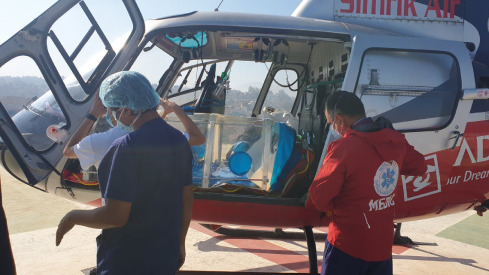
Nepal’s rugged terrain, remote villages, and challenging weather conditions pose significant obstacles to emergency medical services (EMS) access. In such a landscape, where traditional ground transportation may be impractical or impossible, helicopters emerge as crucial lifesaving tools. This blog delves into the indispensable role of Helicopter Emergency Medical Services (HEMS) in Nepal, exploring how these aerial ambulances navigate the country’s diverse terrain to provide timely and critical care to those in need.
Overcoming Geographical Challenges:
Mountainous landscapes and remote villages hinder traditional ambulances. Helicopter Emergency Medical Services (HEMS) leap over obstacles, bringing critical care to those in need, whether it’s a trekker stranded on Everest or a villager in a far-flung valley.
Swift Response and Critical Care:
In medical emergencies, time is of the essence. HEMS in Nepal exemplify rapid response and critical care delivery. Equipped with advanced medical equipment and staffed by experienced medical professionals, these helicopters can provide lifesaving interventions en route to advanced medical facilities. Whether it’s administering emergency medical treatment to trauma victims or stabilizing patients with acute medical conditions, HEMS ensures that patients receive the critical care they need in the shortest possible time, significantly improving their chances of survival and recovery.
Natural Disaster Response and Relief:
When disasters strike, HEMS are frontline responders. They evacuate the injured, deliver medical supplies, and support affected communities. Their agility and versatility are invaluable in navigating disaster zones.
Capacity Building and Training:
HEMS not only save lives but also empower communities. Through training programs, pilots, medics, and responders are equipped with the skills needed for aeromedical operations, strengthening the nation’s emergency response infrastructure.
Conclusion:
In Nepal’s challenging terrain, HEMS are indispensable. They serve as flying lifelines, bridging geographical barriers to provide swift, efficient, and lifesaving medical assistance to those in need. Whether it’s rescuing trekkers from remote mountain trails, responding to natural disasters, or empowering local communities through training initiatives, HEMS play a vital role in safeguarding the health and well-being of Nepal’s population. Flying above the Himalayas, these helicopters ensure that no one is beyond the reach of critical medical care when it matters most.